
RGPD in practice: how to stay compliant in Belgium and Switzerland

1️⃣ Introduction The General Data Protection Regulation (GDPR) has been in force since 2018, but many companies in Belgium and Switzerland are still finding it difficult to comply. Between strict data protection requirements, user rights and heavy penalties for non-compliance, it's crucial to take a proactive approach. In this article, we'll take a look at the essential legal obligations and best practices for ensuring your company's RGPD compliance. 🔍 2️⃣ RGPD: What are your obligations in 2025? The RGPD imposes a number of requirements on companies handling personal data. Here are the main obligations to comply with: 📌 1. Data collection and processing ✔ You must inform users about the purpose of data collection.✔ Data must only be collected for a specific and legitimate purpose.✔ User consent must be clear, explicit and documented. 📌 2. Data security and confidentiality ✔ Implement security protocols (encryption, restricted access, etc.).✔ Ensure systems are updated to avoid security breaches.✔ Appoint a Data Protection Officer (DPO) if necessary. 📌 3. User rights ✔ Enable users to request access, rectification or deletion of their data.✔ Ensure data portability if a user wishes to transfer it to another service. 📌 4. Notification in the event of a data breach ✔ You must report any data leakage to the Data Protection Authority (DPA) in Belgium or the Federal Data Protection Commissioner in Switzerland within 72 hours. 📌 3️⃣ RGPD in Belgium vs. Switzerland: what are the differences? Although Switzerland is not part of the European Union, it has adopted legislation similar to the RGPD: the nLPD (New Data Protection Law), which came into force in 2023. 🇧🇪 In Belgium ✅ Strict application of the European RGPD✅ Penalties of up to 4% of worldwide sales✅ Obligation to appoint a DPO for certain companies 🇨🇭 In Switzerland ✅ Law aligned with the RGPD but with fewer administrative obligations✅ Penalties of up to 250,000 CHF✅ Obligation to inform users about the purpose of data processing In summary, even if Switzerland has its own rules, it's best for any company operating in Europe to adopt the RGPD as standard to avoid any legal complications. 🚀 4️⃣ How can you ensure your company's compliance? 🛠 1. Carry out a compliance audit An RGPD audit enables you to identify flaws in your data management and define the necessary corrective measures. 🔒 2. Strengthen cybersecurity ✔ Install a firewall and a high-performance antivirus (e.g. Bitdefender).✔ Encrypt sensitive data to prevent any leakage of information.✔ Set up a data access management policy. 📄 3. Update the privacy policy Your website should display a clear and transparent privacy policy, specifying:✔ The types of data collected✔ The purpose of data processing✔ The data retention period 📧 4. Manage user consent ✔ Set up an RGPD-compliant cookie banner.✔ Enable users to easily choose which cookies are accepted.✔ Keep track of consents for proof in the event of an audit. ✅ 5️⃣ Conclusion RGPD compliance is a legal obligation, but also an opportunity to strengthen your customers' trust. 📞 Need support to ensure your company's RGPD compliance in Belgium or Switzerland? Contact Webiphi today for a personalized audit and tailored solutions!
Linux or Windows server: making the right choice for your business

1️⃣ Introduction Choosing a server is a strategic decision for any company wishing to host its website, manage its databases or deploy applications. Linux and Windows are the two main options, but each system has its advantages and disadvantages. If you're an SME in Belgium, you may be wondering which server to choose to ensure security, performance and stability. Here's a detailed guide to help you make the best decision for your business. 🔍 2️⃣ Linux vs Windows: what are the main differences? Before making a choice, it's important to understand the specifics of each system. 🔹 1. Cost and licenses ✅ Linux: ❌ Windows: 🔹 2. Stability and performance ✅ Linux: ❌ Windows: 🔹 3. Security and data protection ✅ Linux: ❌ Windows: 🔹 4. Compatibility with software and applications ✅ Windows: ❌ Linux: 📌 3️⃣ Which server should you choose for your business in Belgium? The choice depends on your specific needs and budget. 🎯 You should choose a Linux server if... ✔ You manage a website based on WordPress, Joomla or Prestashop✔ You want to reduce your hosting costs✔ You need a stable, high-performance and highly secure server✔ Your company uses open-source technologies 🎯 You should choose a Windows server if... ✔ Your company uses Microsoft solutions like SQL Server or .NET✔ You need a user-friendly graphical interface✔ You want compatibility with Microsoft tools and Active Directory✔ Your IT team is more comfortable with Windows 🚀 4️⃣ What impact will it have on your company's IT management? Once the server has been chosen, it's essential to manage its infrastructure correctly to guarantee security and performance. 🔹 Outsourcing your server management: an effective solution 💡 Entrusting the management of your server to an IT service provider allows you to benefit from:✅ 24/7 support in the event of technical problems✅ Automatic updates and enhanced security✅ Optimized performance and reduced costs 🔥 5️⃣ Conclusion Linux or Windows? The right choice depends on your needs, your budget and the tools you use. 📞 Need help choosing your server? Contact Webiphi, your IT expert in Belgium, and benefit from a solution tailored to your business!
How can you optimize your emailing to reduce churn?

Email marketing remains one of the most effective channels for building customer loyalty and increasing sales. However, a high churn rate can undermine the effectiveness of your campaigns and reduce your audience. So how can you prevent your subscribers from leaving your list? Here are the best practices for optimizing your emailing and reducing churn. 1: Understand the causes of unsubscribing Before looking to optimize your emailing strategy, it's essential to understand why your subscribers are unsubscribing. 🔹 Too many emails sent 📬🔹 Irrelevant or non-personalized content ❌🔹 Unattractive or unreadable design on mobile 📱🔹 Email subject lines too aggressive or misleading ⚠️🔹 Lack of a clear option to manage email frequency 💡 An analysis of returns and click-through rates can help you identify weak points in your campaigns. 2. segment your audience to send targeted emails Effective emailing relies on good audience segmentation. 🔹 How do you segment your subscribers? ✅ By age, gender, location 📍✅ By purchasing behavior 🛒✅ By level of engagement (active customers, inactive, new subscribers)✅ By centers of interest 🎯 💡 Sending a relevant message to the right person helps reduce unsubscribe rates. 3. Look after your subject lines and preheader The email subject line is the first thing your audience sees. It must be attractive and enticing. ✅ Best practices for an effective subject line ✔️ Short and punchy (50 characters max)✔️ Personalized with the first name of destinataire✔️ Avoid spam words ("Free", "Urgent", "Click here")✔️ Test several subject lines (A/B Testing) 💡 The preheader (content preview) should complement the subject line and make people want to open the email. 4. Personalize your emails to engage your subscribers Generic emails have little impact on subscribers. Personalization improves engagement. 💡 Personalization tips 🔹 Add the recipient's first name🔹 Recommend products based on purchase history🔹 Send exclusive offers to loyal customers🔹 Tailor content according to stated preferences 💡 A personalized email can increase open rates by 26 %! 5. Offer a better user experience (UX design and readability) An overly busy design or a poorly optimized email can encourage subscribers to unsubscribe. 🎨 Good UX practices ✔️ Responsive design (readable on mobile and desktop)✔️ Airy content with paragraphs courts✔️ A clear call to action (visible and engaging CTA)✔️ An attractive design with optimized images 💡 A well-designed email improves the experience and reduces the risk of unsubscribing. 6. Optimize your email frequency 🔹 Send too many emails 📩 ➜ fatigue your subscribers🔹 Don't send enough 📭 ➜ loss of interest 📅 What frequency should you adopt? 💡 Suggest an option to manage email frequency instead of a total unsubscribe. 7. Add a clear and transparent unsubscribe option If a subscriber wants to unsubscribe, don't make the process complicated. 🚀 Best practices ✔️ An unsubscribe link visible at the bottom of email✔️ An option to change the frequency of envoi✔️ A quick survey to understand the reasons for leaving 💡 A smooth process improves your brand image and reduces frustration. Conclusion: Build subscriber loyalty with optimized emailing! To reduce churn, you need to offer your subscribers a quality experience with relevant, personalized and well-targeted content. ✅ Analyze the reasons for unsubscribing✅ Segment and personalize your emails✅ Take care of the subject line and user experience✅ Test and adjust your sending frequency✅ Offer a preference management option 🚀 Need a high-performance emailing strategy? Contact Webiphi to optimize your campaigns and build subscriber loyalty!
The next-generation firewall: a major cybersecurity asset for SMEs

Small and medium-sized enterprises (SMEs) are increasingly the target of cyber-attacks, often perceived as vulnerable by hackers. In the face of these growing threats, a Next-Generation Firewall (NGFW) has become an indispensable tool for effectively protecting corporate networks. Find out why and how to integrate this solution into your cybersecurity strategy. 1. What is a Next-Generation Firewall? Unlike traditional firewalls that simply filter incoming and outgoing network traffic, NGFWs incorporate advanced features for enhanced protection: 🔹 Deep packet inspection (DPI - Deep Packet Inspection)🔹 Intrusion detection and prevention (IDS/IPS)🔹 URL and application filtering🔹 Real-time threat analysis with artificial intelligence🔹 Protection against malware and ransomware 💡 A next-generation firewall acts as a truly intelligent shield for your business! 2. Why are SMEs vulnerable to cyber attacks? 📊 Some alarming figures: SMEs often lack cybersecurity resources and knowledge, which exposes them to a variety of risks:🔹 Theft of customer data 📂🔹 Ransomware attacks 💻🔹 Phishing and phishing 📧🔹 Intrusions on the internal network 🚨 💡 A next-generation firewall protects your business against these threats by anticipating attacks! 3. The benefits of a next-generation firewall for your SMB ✅ Advanced protection against cyberattacks An NGFW monitors and blocks all cyberattack attempts in real time, adapting to new threats thanks to artificial intelligence. ✅ Access control and content filtering You can restrict access to dangerous or inappropriate sites and limit the use of certain insecure applications. ✅ Secure remote connections (integrated VPN) With telecommuting on the rise, an NGFW firewall integrates secure VPN solutions to protect your employees' remote connections. ✅ Compliance with RGPD regulations and cybersecurity A high-performance firewall helps your company comply with data protection standards and avoid RGPD-related penalties. ✅ Centralized management and ease of use Even for an SME without a dedicated IT team, an NGFW offers an intuitive interface for easily monitoring and managing network security. 4. How to choose the right next-generation firewall? To select the right NGFW firewall for your SME, here are the essential criteria to consider: 🔹 Capacity and performance (adapted to the size of your business)🔹 Protection against advanced threats (ransomware, phishing, etc.)🔹 Compatibility with your existing infrastructures🔹 Ease of administration and technical support🔹 Budget and operating costs 💡 Need advice? Webiphi helps you choose and install the ideal NGFW firewall for your business! 5. Why call in a cybersecurity expert? The installation of a new-generation firewall must be accompanied by a comprehensive cybersecurity strategy including:✅ A risk and vulnerability assessment✅ An optimal, customized configuration✅ Regular maintenance and monitoring✅ Employee awareness of cyberthreats 💡 Webiphi helps you secure your SME in Belgium and Switzerland! Conclusion: Protect your SME with an NGFW firewall! In 2025, no company, even an SME, can do without a next-generation firewall. This advanced solution makes it possible to:✅ Block cyberattacks in real time✅ Secure connections and data exchanges✅ Improve RGPD compliance✅ Easily manage network security 🚀 Don't take any risks! Contact Webiphi today to protect your business with a high-performance NGFW firewall.
Why adopt a responsive design for your e-commerce site in 2025?
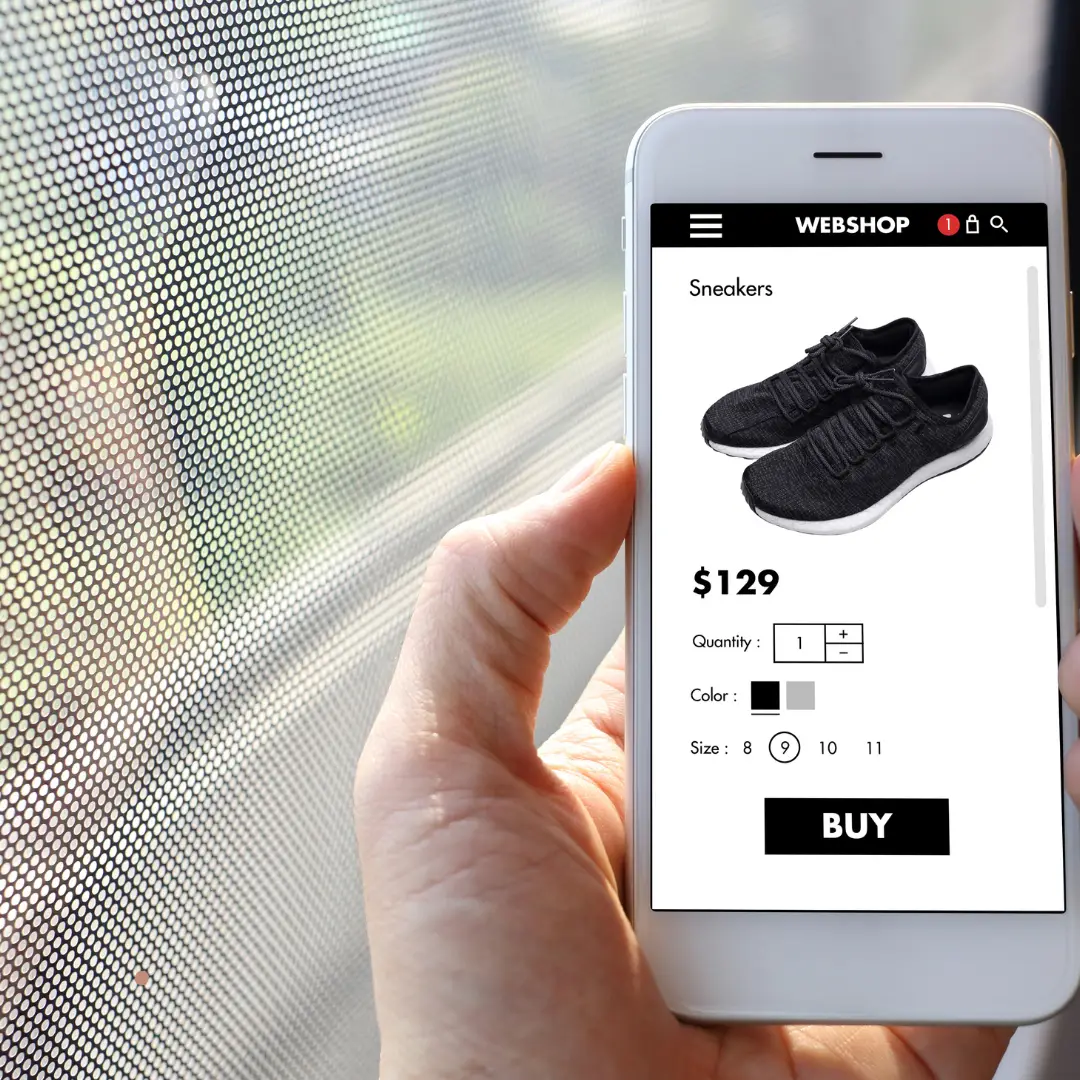
With the rise of e-commerce and the increasing number of purchases made via smartphones and tablets, having a responsive e-commerce site is more important than ever. In 2025, adaptive design is a key criterion for improving user experience, maximizing sales and boosting SEO. So why is a responsive e-commerce site essential? Here are 5 essential reasons to adopt it now. 1. An enhanced user experience on all devices A responsive e-commerce site automatically adapts to the screen size, whether it's being viewed on:✅ Computer 💻✅ Smartphone 📱✅ Tablet 📊 💡 Smooth, intuitive navigation improves the user experience and reduces bounce rates, boosting conversions. 🚀 Better UX = More sales! 2. A direct impact on your SEO Google now favors mobile-optimized websites with its mobile-first indexing. 🔹 A responsive site ranks higher in search results🔹 A fast loading time reduces the bounce rate🔹 A unique design avoids penalties related to duplicate content (compared to a separate mobile version) 💡 Good SEO = More visibility and traffic to your online store 3. Increased conversion rate and sales 📊 Some key figures: A fast, ergonomic site improves visitor retention and increases the conversion rate. 💡 A responsive site means more customers and more sales! 4. Simplified management and easier maintenance Unlike old methods that required two versions of a site (desktop and mobile), a responsive design relies on a single site that adapts dynamically. 🔹 Single update for all platforms🔹 Saves time and resources in site management🔹 Less risk of errors and inconsistencies between versions 💡 A responsive site is simpler to administer and more economical in the long term. 5. Compatibility with new technologies E-commerce trends are evolving rapidly with the emergence of new technologies such as:🔹 Voice navigation (e.g. Google Assistant searches, Siri, Alexa)🔹 Progressive Web Apps (PWAs)🔹 Artificial intelligence and machine learning A responsive design guarantees that your site will remain high-performing and compatible with these upcoming innovations. 💡 Adopting a responsive design means preparing the future of your online store! Conclusion: Go responsive now! By 2025, a non-responsive e-commerce site risks losing visibility, traffic and conversions. Adopting an adaptive design allows you to:✅ Improve the user experience✅ Boost your SEO✅ Increase your sales and conversions✅ Make it easier to manage and maintain your site✅ Anticipate technological evolutions 🚀 Want to modernize your e-commerce site with a responsive design?Call on Webiphi, your expert in creating high-performance, optimized sites!
The role of user experience in the digital transformation of Belgian companies

Introduction In an environment where the internet and digital applications increasingly dictate customer journeys, digital transformation has become a strategic requirement for Belgian companies. But adopting tools is not enough: the effectiveness of this transition depends directly on the user experience. A well-designed user experience increases engagement, facilitates access to information, and accelerates conversion. A well-designed website or application with a clear interface reduces friction during interactions and improves the perception of your brand. In the following sections, we describe why UX is an essential lever and which practices to prioritize in order to transform your digital product or service into a commercial asset. Why is UX a key element of digital transformation? Better accessibility and navigation One of the fundamental aspects of the experience is helping users quickly find the information they need. A simple journey and logical navigation reduce abandonment and improve satisfaction. In concrete terms, this involves: Increasing conversion rates through UX An optimized user journey transforms visits into measurable actions (registration, quote requests, purchases). Targeted UX solutions reduce friction points in the purchase funnel and increase user confidence in your brand. Build customer loyalty through an optimized experience A good experience boosts customer satisfaction: a satisfied user returns, recommends, and consumes more products or services. UX therefore has an impact on customer retention and value in the long term. How can you optimize UX for a successful digital transformation? 1. Understand user expectations Before making any changes to your website or application, start by analyzing users' real needs and behaviors. A good research phase aligns product design with customer expectations and reduces the risk of investing in unnecessary features. Recommended tools: Google Analytics (quantitative analysis), Hotjar (heat maps and recordings), and short forms to gather customer feedback. These elements fuel the user-centered design process and guide design priorities. 2. Focus on a clean, responsive design The design and layout of the interface directly influence the experience and perception of your brand. Today, many users access websites via mobile devices: adapt the design for all screens and simplify access to information. Practical tip: conduct a quick audit of your main pages (homepage, product/service pages, contact page) and prioritize fixes that improve readability, navigation, and loading time. 3. Test and improve continuously UX is an iterative process: set up feedback loops to measure the impact of changes and adjust based on the data. Quick operational checklist Concrete examples and best practices Summary example: after simplifying the purchase funnel (reducing it from 4 to 2 steps) and optimizing CTAs, a Belgian SME saw a significant increase in conversions and a decrease in abandonment—proof that improving design and user experience pays off quickly. If you would like a customized audit, request an evaluation of your site to obtain prioritized recommendations. Finally, involve designers, developers, and sales managers from the beginning of the process: UX is a cross-functional task that, when done well, transforms a site or application into a real growth tool for your business. Conclusion: UX, a strategic lever for Belgian companies Investing in an optimized user experience means transforming a website or application into a real commercial asset. A polished design, a fluid user interface, and fast navigation improve satisfaction, strengthen brand credibility, and increase conversion rates—measurable gains that support your company's digital transformation. At Webiphi, we support Belgian companies in their digital transition by placing the user experience at the heart of product design and strategy. Our services cover UX auditing, responsive design, user testing, and continuous journey optimization. Want to improve your website's UX? Request a personalized UX audit: we'll conduct a quick assessment of your key pages and propose prioritized solutions to increase customer satisfaction and conversion.
How can you secure your web applications in the face of new cyberthreats?

Cyber-attacks on web applications are on the increase, putting company and user data at risk. With the rapid evolution of techniques used by hackers, it's crucial to strengthen web application security to avoid intrusions, data theft and service interruptions. In this article, we'll take a look at the new cyberthreats and how to effectively secure your web applications. 1. New cyberthreats targeting web applications With advances in technology, cybercriminals are developing ever more sophisticated attacks. Here are some of the major threats in 2025: 🔹 SQL injection attacks ✔ Hackers insert malicious code into a form or URL to access databases.✔ Objective: steal or modify sensitive information. 🔹 XSS (Cross-Site Scripting) attacks ✔ Injection of malicious scripts to hijack user sessions.✔ Can be used to steal cookies or infect visitors with malware. 🔹 Ransomware and malware ✔ Infection of a web application via security holes in plugins or extensions.✔ Objective: encrypt data and demand a ransom to recover it. 🔹 DDoS (Distributed Denial of Service) attacks ✔ Hackers overload a server with massive traffic to make the site unavailable.✔ Impact: loss of sales and damage to reputation. 🔹 Session Hijacking ✔ Hackers steal users' session credentials to gain unauthorized access to their accounts. These threats require advanced security strategies to effectively protect your web application. 2. Best practices for securing your web applications Here are the essential measures for strengthening your web application's security in 2025: 🔑 1. Use an application firewall (WAF - Web Application Firewall) ✔ Filter malicious requests and block XSS, SQLi and DDoS attacks.✔ Examples: Cloudflare, AWS WAF, Imperva. 🔒 2. Encrypt data with SSL/TLS ✔ Activate an SSL certificate to encrypt communications between browser and server.✔ Check that your site uses HTTPS instead of HTTP. 🛠️ 3. Regularly update your software and plugins ✔ Updates correct security flaws exploited by hackers.✔ Remove unnecessary extensions to reduce risks. 👤 4. Secure user credentials and access ✔ Enable multi-factor authentication (MFA) to protect administrator accounts.✔ Implement strict management of roles and permissions. 🚧 5. Protect your database against SQL injections ✔ Use parameterized queries to prevent SQL injections.✔ Limit your database privileges to strictly necessary users. 🛑 6. Protect against DDoS attacks ✔ Configure anti-DDoS services like Cloudflare or Akamai.✔ Set up real-time monitoring to detect any suspicious activity. 📊 7. Perform regular security tests ✔ Perform penetration tests (pentests) to identify and correct vulnerabilities.✔ Use tools such as OWASP ZAP, Burp Suite or Nessus. 📌 8. Set up a backup and recovery plan ✔ Perform automatic backups and store them on a secure external server.✔ Regularly test backup restoration to avoid data loss. 3. Recommended tools to secure your web applications 🔹 Cloudflare ✔ Advanced WAF protection against XSS, SQLi and DDoS attacks. 🔹 Bitdefender GravityZone ✔ Secures your servers and applications against malware and ransomware. 🔹 OWASP ZAP ✔ Scans and detects vulnerabilities on your website. 🔹 Let's Encrypt SSL ✔ Provides a free SSL/TLS certificate to secure your connections. 🔹 Google reCAPTCHA ✔ Prevents bot attacks and protects forms from spam. 4. Why outsource your web application security? Entrusting your application security to cybersecurity experts can save you time and guarantee optimum protection. ✔ Continuous monitoring and automatic updates✔ Reduced costs associated with cyberattacks✔ Compliance with international security standards (ISO 27001, GDPR, Swiss LPD) 💡 Webiphi supports you in strengthening the security of your web applications and preventing cyberattacks. Conclusion: Secure your web application today With cyberthreats on the rise, it's essential to take a proactive approach to protecting your web applications and your users' data. 📌 Things to remember:✔ Activate an application firewall (WAF) to filter out malicious requests.✔ Encrypt data with an SSL/TLS certificate.✔ Perform regular updates to avoid security vulnerabilities.✔ Set up a backup plan and real-time monitoring. 🔐 Need a security audit? Contact Webiphi, your cybersecurity partner, to strengthen the protection of your web applications.
Key steps to a successful local SEO campaign in Benelux

Local SEO is a concrete lever for businesses that want to attract nearby customers. In the Benelux (Belgium, Netherlands, Luxembourg), local competition requires a targeted strategy: optimizing your listing, geolocated content, mobile performance, and acquiring reviews. Webiphi is an agency specializing in local SEO, website creation, and digital accessibility (EAA/WCAG 2.1 AA compliance). We support businesses in Brussels, Flanders, Wallonia, and throughout the Benelux to improve their presence on search engines and Google Maps. In this guide, discover the key steps to a successful local SEO strategy in 2025 and how to capture internet users in the search phase. Contact us for a free local presence audit and find out how Webiphi can help you improve your search results and your chances of being found by nearby customers. 1. Why is local SEO crucial for your business? Local SEO allows your business to appear on Google, Google Maps, and other search engines for local queries such as: 🔹 «Digital agency in Brussels » 🔹 «Best restaurant in Amsterdam» 🔹 «Computer repair in Luxembourg» Some key figures (according to recent studies): By optimizing your local SEO, you increase your visibility among nearby internet users, improve qualified traffic to your site, and multiply conversion opportunities. 2. Essential steps for a successful local SEO strategy 1. Optimize your Google My Business (GMB) listing Webiphi supports businesses: we claim the listing, optimize the information, manage the photos, and implement a review strategy to maximize your chances of appearing in Google Maps and local search results. Request a free GMB audit. 2. Use local keywords To capture local searches, your pages and articles must include geolocated keywords and natural variations: city, neighborhood, services, and expressions used by your customers. Examples of optimized keywords: «Hairdresser in Brussels,» «SEO Consultant in Belgium,» «Hotel with spa in Luxembourg» — place them in titles, meta tags, URLs, and content. Tip: Use tools such as Google Keyword Planner, Ubersuggest, Semrush, or Ahrefs to identify high-volume local queries and tailor your content to what people are searching for. Our services include semantic auditing, local keyword selection, and the creation of optimized pages by city to improve your presence on search engines and results pages. 3. Optimize your website for local SEO An optimized site is essential for turning visibility into customers: clear structure, local pages, and technical performance. Request a mobile technical diagnosis: Webiphi performs a performance and accessibility audit, then implements corrections to improve your pages and search results. 4. Obtain customer reviews and local backlinks Customer reviews and local backlinks strengthen your authority and visibility in results. Example: optimization of a local listing (anonymous) in Brussels: improved photos, reviews obtained, and content adjustments → +35% increase in calls in 3 months. Webiphi can manage these actions for your establishment. 5. Be active on social media and local directories A consistent presence on social media and directories strengthens your visibility and local SEO. Webiphi designs local editorial calendars, manages your accounts, and optimizes distribution so that each publication improves your online presence and attracts nearby customers. 3. Mistakes to avoid in local SEO Ignoring Google My Business (Google Business Profile) → consequence: loss of appearances on Google Maps and in local search results. Solution: claim and fill out the listing (name, address, phone number, hours, photos). Webiphi can manage this step and ensure the consistency of your information (NAP). Neglecting customer reviews → consequence: loss of trust and clicks. Solution: actively request reviews, respond quickly, and integrate testimonials on your pages to improve conversion and user confidence. Not adapting your site for mobile → consequence: poor user experience and loss of search engine rankings. According to recent studies, a large proportion of local searches are made from smartphones; the solution is to optimize speed, responsiveness, and Core Web Vitals. Forgetting local netlinking → consequence: limited authority in the eyes of search engines. Solution: obtain quality links from local directories, regional media, and industry partners to strengthen your site's credibility. In short: effective local SEO requires a comprehensive approach—optimized listings, reviews, a fast and accessible website, and high-quality local links. Contact us for an audit of common errors and receive a personalized checklist to improve your search results. Conclusion: Boost your local visibility now! Local SEO is a direct lever for attracting local customers and growing your business in Benelux (Belgium, Netherlands, Luxembourg). Done right, it improves your search results, increases qualified traffic to your site, and generates more calls or in-store visits. To summarize our recommendations: Webiphi is an agency specializing in website creation, SEO, and online visibility. Our services include: local SEO audits, Google Business Profile optimization, local page creation, local netlinking, review management, and accessibility audits (EAA/WCAG 2.1 AA). We support businesses in Brussels, Flanders, Wallonia, and throughout the Benelux. Want concrete results? Contact us to receive your free local presence audit, request a quick quote, or find out how we can support you with a tailor-made strategy. Customer testimonial (excerpt): «Thanks to Webiphi, our local listing and city pages have been revamped: +40% calls in 4 months.» — customer in the restaurant sector (anonymized example). To learn more about our services, visit our SEO page or contact Webiphi, your SEO partner, directly.
How to protect your data in Switzerland with cloud computing

Data protection is a crucial issue for Swiss companies. With cyber-attacks and data loss on the rise, cloud computing is emerging as an essential solution for ensuring security, accessibility and compliance. In this article, Webiphi explores how the cloud protects your data and why this technology is particularly suited to Swiss businesses. If you already manage an IT site or infrastructure, our free audit can also assess the security and performance of your digital system. 1. The challenges of data protection in Switzerland Switzerland is renowned for its strict data protection standards, thanks in particular to the Federal Data Protection Act (DPA) and the RGPD for companies processing European data. However, there are several challenges threatening corporate security today: Increasing cyber-attacks Risk of data loss or corruption Regulatory compliance To take your compliance further, discover our compliance and web accessibility audits for professional sites and institutions. 2. Why is cloud computing a secure solution? Cloud computing offers a range of security and reliability guarantees tailored to the needs of Swiss businesses. Advanced data security Webiphi sets up secure cloud environments as part of its IT maintenance and cybersecurity services. Data backup and recovery These best practices are already integrated into our online visibility and professional hosting offers, which include full server management and Plesk backups on OVH servers. Accessibility and flexibility Compliance with Swiss and European standards 3. How do you choose the right cloud solution for your business? To guarantee the security and compliance of your data, here are the essential criteria to consider before choosing your cloud solution: 1. Server location 2. Security measures 3. Reliability and availability 4. Compatibility with your existing tools Our experts can help you with the migration and configuration of your company's cloud, with seamless integration of your existing tools. 4. Best cloud solutions for Swiss companies Here are some reliable cloud solutions that comply with Swiss legal requirements: Infomaniak Cloud Microsoft Azure Switzerland Swisscom Cloud AWS Switzerland For support in choosing the best solution, discover our cloud maintenance and management service. 5. Best practices for securing your data in the cloud Strengthen user authentication Encrypt sensitive data Define access management policies Carry out regular security audits Conclusion: Protect your data in Switzerland with cloud computing Cloud computing is today's most reliable solution for protecting Swiss companies' data from cyberattacks, accidental loss and legal obligations. To remember : For a complete implementation, contact Webiphi today. We'll help you choose, configure and maintain your secure cloud solution for Swiss businesses.
WordPress maintenance: how to avoid breakdowns and security breaches

WordPress is the world's most widely used CMS, accounting for over 40 % of all websites. However, without regular maintenance, it can become vulnerable to security flaws, bugs and crashes. In this article, Webiphi shares best practices for maintaining your WordPress site and ensuring its long-term security, speed and performance. If you'd like a full diagnosis of your site before you get started, request a free SEO and technical audit now. 1. Why is WordPress maintenance essential? Maintaining a WordPress site isn't just about publishing content. It's a proactive approach to ensuring the stability, security and performance of your website. Protect against cyber-attacks Our experts in cybersecurity and IT maintenance set up firewalls, monitoring systems and automated backups to protect your site 24/7. Improve site performance Our custom web development projects already incorporate these best practices to ensure a fast, stable and responsive site right from the start. Ensuring a good user experience To take things a step further, we also offer web accessibility audits to ensure an inclusive experience that complies with the new European standards. 2. Key steps to effective WordPress maintenance 1. Update WordPress, themes and plugins Our WordPress maintenance services include automated checking and control of all critical updates. 2. Back up your site regularly We use secure Plesk servers (hosted by OVH) to store data and automate backups as part of our online hosting and visibility service. 3. Secure your site against cyber-attacks Our IT protection and monitoring solutions enable you to secure your entire infrastructure (site, server, messaging, database). 4. optimize your WordPress database Our experts intervene directly via Plesk and integrate these optimizations into WordPress and server maintenance contracts. 5. Monitor site performance We integrate these indicators into our technical SEO audit to cross-reference speed, structure and natural referencing. 3. How to avoid common WordPress maintenance mistakes? Not backing up before updating Always back up before updating to avoid data loss and plugin conflicts. Installing too many plugins An excess of extensions slows down your site and can create incompatibilities. Limit yourself to essential, validated and regularly updated plugins. Ignore security notifications Don't let your WordPress alerts go unanswered. Security notifications are often signals of attack or vulnerability. Don't protect access to administration 4. Outsourcing WordPress maintenance: a strategic choice Entrusting the maintenance of your site to a professional web agency like Webiphi lets you concentrate on your business while keeping a reliable, high-performance site. We offer complete WordPress maintenance and cybersecurity packages, integrated with your online visibility strategy for ongoing performance. Conclusion: a secure, high-performance WordPress site thanks to regular maintenance WordPress maintenance is essential to ensure the stability, security and performance of your site. Without regular maintenance, even the best site will eventually slow down, bug or become vulnerable. Don't leave your WordPress site unattended. Contact Webiphi now for a complete audit and a professional WordPress maintenance plan tailored to your needs. Professional, stress-free maintenance.
