
Google Visibility Audit: Complete Method 2026 for Belgian SMEs

Google visibility audit: the WEBIPHI method for Belgian SMEs. SEO + GEO + Core Web Vitals + authority diagnosis. Clear roadmap in 10 days.
AI visibility audit: will your company appear in ChatGPT, Gemini and Perplexity in 2025?

7-step method for auditing your company's visibility in ChatGPT, Gemini and Perplexity. Free tools, Belgian examples, concrete action plan.
LLM SEO Belgium : 2026 Practical Guide to being Cited by ChatGPT, Gemini & Perplexity

LLM SEO Belgique : la méthode WEBIPHI pour rendre votre site citable par ChatGPT, Gemini, Perplexity et Claude. Practical guide 2026 for Belgian SMEs and self-employed workers.
GEO SEO: Boost your visibility in Belgium

Strengthen your online presence in Belgium with our expertise in GEO SEO. Optimize your local SEO and generate more leads.
SEO 2026: the complete guide for Belgian SMEs facing AI and new engines

SEO 2026 deciphered for Belgian SMEs: generative AI, voice search, Core Web Vitals, GEO, mobile-first. Concrete strategy, tools, action plan.
Professional website: the essential guide for Belgian SMEs in 2026

Everything you need to create a high-performance professional website in Belgium: steps, real costs, local SEO, security, RGPD compliance and 2025 accessibility.
Prime digitalisation Bruxelles: the complete guide for SMEs and self-employed workers in 2025

All you need to know about the digitalization bonus in Brussels: eligibility requirements, amount, projects supported, procedure and WEBIPHI support.
Prime à la Digitalisation Belgique : Guide Complet 2026 PME

Digitization bonus in Belgium: Brussels, Wallonia, Flanders. Conditions, amounts, services covered, file. WEBIPHI 2026 guide for SMEs.
New law on digital accessibility in Belgium: are you compliant by 2025?
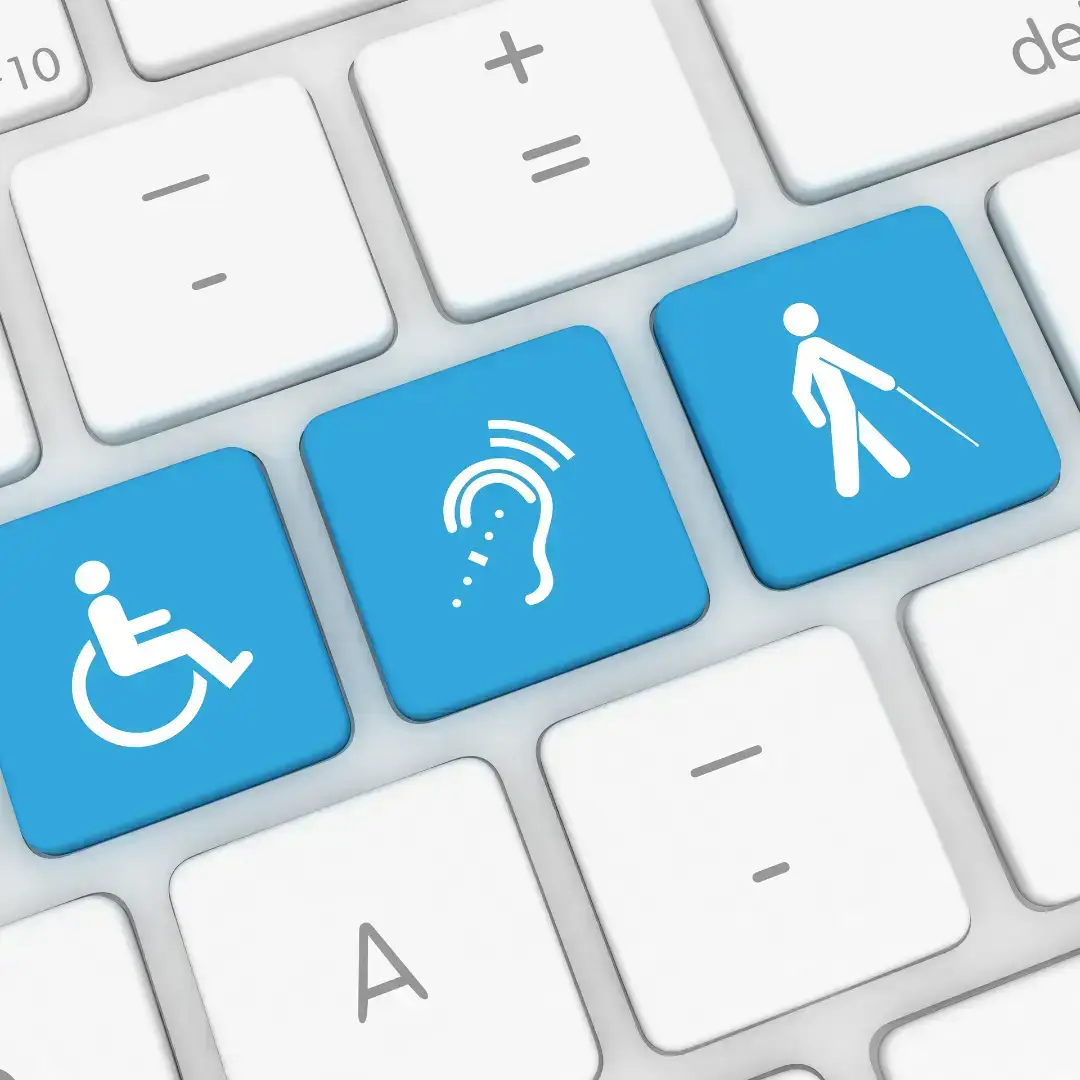
As of June 28, 2025, a new European regulation on digital accessibility redefines expectations for online sites and services. The European Accessibility Act (EAA) obliges stakeholders - including many companies in Belgium - to make their websites and digital services usable by everyone, including people with disabilities. This law is no longer limited to government agencies: if you run a platform, e-commerce or public-facing application in Belgium, you're probably concerned. Consult our related page to quickly understand the concrete actions to be taken and check whether your site needs to be brought into compliance. A European directive now in force Adopted in 2019 (EU Directive 2019/882), the European Accessibility Act became effective on June 28, 2025. This European law aims to guarantee the accessibility of digital products and services for all: people with reduced mobility, visual or hearing impairments, or cognitive disorders. The EAA complements Directive 2016/2102 (focused on the public sector) by extending digital accessibility requirements to the private sector. In concrete terms, it covers a wide range of digital products and services (websites, applications, sales platforms or online services) and relies on harmonized standards to facilitate application in all member states. In Belgium, the transposition specifies practical obligations and deadlines. If you are responsible for an online service intended for the public, check the applicable national requirements: they define which pages or applications must meet accessibility criteria, and how to document compliance. Who is concerned in Belgium? Affected by the law: Micro-businesses (fewer than 10 employees and annual sales of less than 2 million euros) can benefit from an exemption, provided they can prove that compliance would be a disproportionate burden. However, this must be justified and documented. For example, a small Belgian e-commerce store whose compliance costs would jeopardize its business could apply for this exemption - but it would have to provide figures and a mitigation plan. What technical obligations must be met? The directive is based on the European standard EN 301 549, which incorporates the WCAG 2.1 level AA recommendations. In concrete terms, here's an operational checklist that your technical and content teams should be able to tick off to improve the accessibility of your pages and applications: A non-compliant site creates a real digital barrier for a significant proportion of people in Belgium. Beyond the technical aspect, accessibility is an issue of inclusion: it ensures that everyone can access information and services online. Practical tip: test your pages with automated tools, but also with manual tests and assistive technologies (NVDA, JAWS, VoiceOver) to validate the real user experience and identify the criteria to prioritize. What are the risks of non-compliance? Penalties vary from one member state to another. In Belgium, serious breaches of accessibility can result in substantial fines - up to 200,000 euros in some cases - and, if persistent, daily penalties (e.g. 1,000 euros per day) until compliance is restored. Beyond financial penalties, other operational and commercial consequences can affect your organization: If you receive a complaint: 1) document the report; 2) launch a priority accessibility audit; 3) put in place temporary measures (e.g. accessible alternatives) and a corrective plan; 4) keep proof of your actions - this can reduce risks and demonstrate your good faith to the authorities. Tip: anticipate these risks through a progressive, documented improvement in accessibility. A quick audit can identify priorities and limit the impact on your users and online activities. What's the impact for Belgian companies? For companies established in Belgium, EAA is first and foremost a legal obligation, but also a twofold opportunity: to reduce legal risks by anticipating sanctions, and to gain market share by making your services accessible to a wider audience. In concrete terms, an accessible site improves: Concrete examples: an accessible Belgian online store simplifies the purchasing process for visually impaired users; an accessible corporate site facilitates access to information for all seniors. These improvements involve both substance (content) and form (technical design). If you'd like a quick assessment: request an accessibility diagnosis to identify priorities and define an action plan tailored to your organization in Belgium. How do you make your site compliant? Compliance requires specialized web expertise: auditing, technical corrections and user testing. Here's a clear, pragmatic process that you can follow or ask a service provider to implement. At Webiphi, we apply this process, using auditing tools (automated and manual) as well as real tests with users. We offer tailor-made solutions - from a one-off correction to a complete overhaul - adapted to showcase sites, e-commerce or service platforms. Typical process (example schedule): Initial audit (2 weeks) → Prioritization & planning (1 week) → Technical corrections (2-6 weeks depending on complexity) → User testing and final report. If you'd like us to help you: Compliant website design in Belgium - ask for a free audit or an estimate tailored to your project. What to remember Element Detail Current law European Accessibility Act (EU Directive 2019/882) Application Since June 28, 2025 - check national transposition for practical details in Belgium. Companies concerned Private sector including commercial websites, e-commerce, banks, online services, applications and digital media. Standards to be met EN 301 549 and WCAG recommendations (reference: WCAG 2.1 level AA - check whether national updates impose WCAG 2.2). Exceptions Micro-businesses (exemption possible) subject to documented justification of disproportionate burden. Risks Fines (up to €200,000), daily penalties, suspension of access, loss of public contracts and infringement of intellectual property rights.
Benelux corporate social networks: a comprehensive strategic guide to 2025

Social networking strategy for Benelux companies: choice of platforms, timetable, formats, KPIs, realistic budget, concrete Belgian examples.
