
A hotel website High performance is currently the most cost-effective way to increase your direct reservations and regain control of your profit margins. In practical terms: a fast, multilingual website with a built-in booking engine allows your property to generate revenue from room nights without paying 15 to 25 % in commission to online travel agencies (OTAs) like Booking.com or Expedia. In this article, a Belgian digital agency explains the 9 practical steps to turn your website into your primary source of bookings.
In a nutshell: To sell directly, a hotel website needs five key components—a seamless booking engine, secure payments (including Bancontact), a flawless mobile version, local and multilingual SEO, and a frictionless conversion journey. The rest of this guide explains how to bring these elements together and how much it costs in Belgium.
What is a hotel website designed for direct bookings?
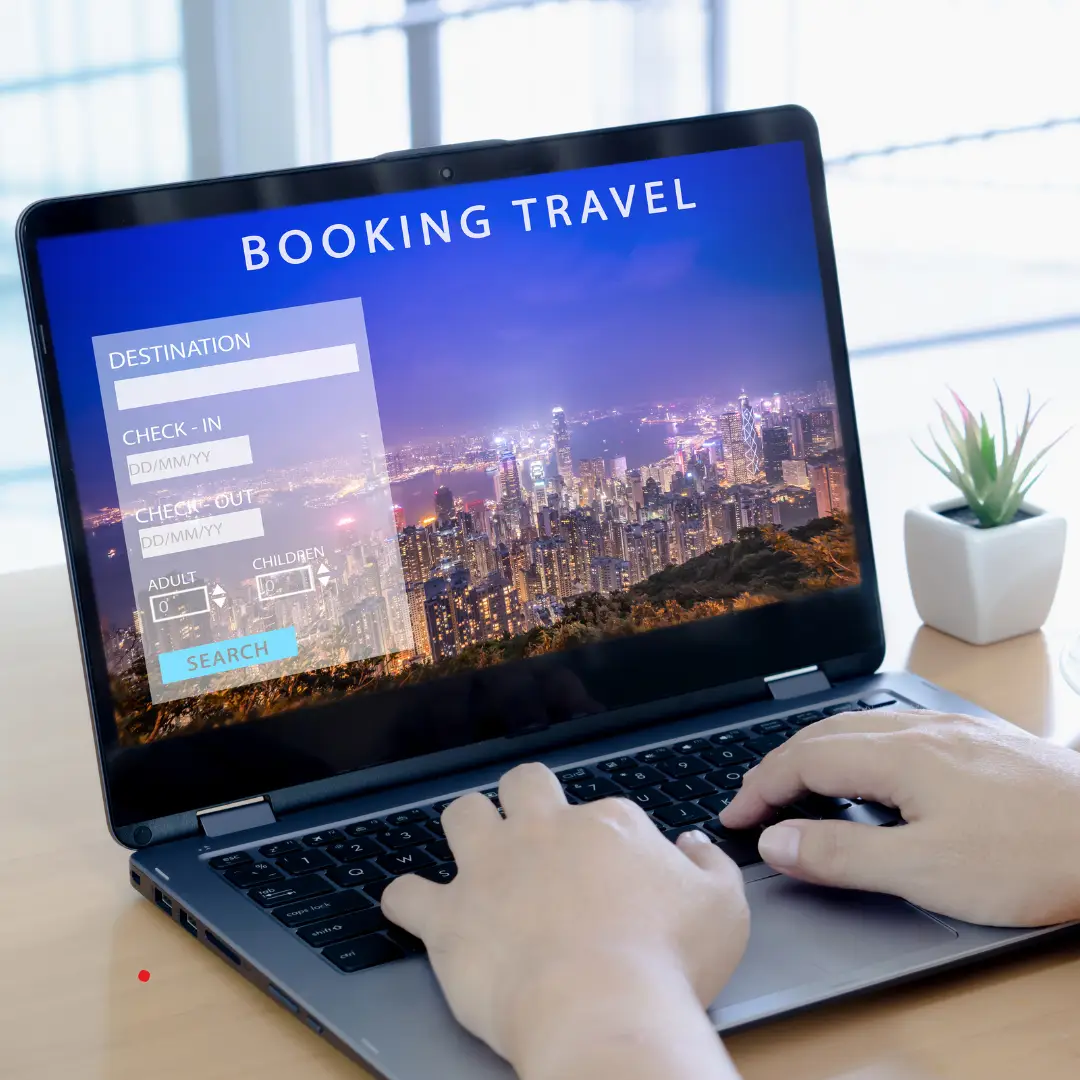
A hotel website A direct-booking website is an official site designed to allow visitors to check availability, compare rooms, and pay for their stay in just a few clicks, without going through a third-party platform. It differs from a simple showcase site in that it features a booking engine connected to your property management system (PMS) and a secure payment gateway.
The difference is financial rather than technical. With a reservation made through an OTA, the commission directly cuts into your profitability. With a direct booking, that margin stays with your property and funds your services, your staff, and your investments. That’s why a good hotel website is measured by a single metric: its ability to convert a visitor into a booking customer.
Why Direct Bookings Are Vital for Your Hotel
Reduce dependence on OTA commissions
Online booking platforms typically charge between 15 % and 25 % of the amount for each night’s stay. For a hotel that generates a significant portion of its revenue through Booking.com or Expedia, these commissions often amount to a major expense over the course of a year. Every reservation booked directly on your own website represents profit that is retained in full.
Take Advantage of the OTA's Visibility
OTAs aren’t just competitors—they also act as billboards. Many travelers discover a property on a platform, then visit the hotel’s official website before making a decision—a phenomenon well documented in the industry as the ’billboard effect.« If your website is reassuring, fast, and offers a clear benefit to booking directly, you can turn the paid visibility from OTAs into commission-free bookings.
Build customer loyalty and collect your own data
A direct booking gives you access to the customer’s email address, preferences, and permission to contact them again. This allows you to build your own proprietary database—an asset that platforms never share with you—for your loyalty campaigns, seasonal offers, and follow-ups. The online visibility Your hotel becomes an asset, not a rental.
The 9 Key Features of a High-Performance Hotel Website
Here are the nine elements that distinguish a website that generates sales from a simple online presence. Each one has a direct impact on your conversion rate.
1. An integrated and synchronized booking engine
Without a booking module on your official website, direct bookings aren’t possible. The booking engine must display real-time availability and sync with your PMS and channel manager to prevent overbooking. The experience must be as simple as it is on an OTA; otherwise, visitors will leave to book elsewhere.
2. Secure payments tailored to Belgium
Offer reliable, local payment methods: credit cards, Bancontact, and international options like PayPal for international customers. A payment method that feels secure and familiar reduces last-minute cart abandonment.
3. A responsive design built with a mobile-first approach
Most searches for accommodations are now conducted on smartphones. A website that doesn't display properly on mobile devices will drive customers away. The custom web development ensures a smooth browsing experience on computers, tablets, and smartphones—an essential requirement for conversion.
4. Local and Multilingual Search Engine Optimization
A hotel website optimized for local SEO attracts travelers searching for «hotel + city» when they’re ready to book. In Belgium, offering multiple languages isn’t an option—providing content in French, Dutch, and English expands your market and improves your search engine rankings for each language version.
5. Controlled loading speed
A slow website loses bookings and is penalized by Google. Technical performance (Core Web Vitals) affects both search rankings and conversion rates. Speed isn’t just a matter of user convenience—it’s a revenue driver.
6. A visually appealing presentation
A gallery of high-quality photos and immersive videos showcases your rooms and facilities. Visitors are buying an experience before they book a night—make sure to highlight it clearly.
7. Featured Customer Reviews
Including authentic reviews reassures prospective guests and builds trust at the moment of decision. Social proof is one of the most powerful conversion drivers for a hotel.
8. Exclusive live offers and packages
Give guests a concrete reason to book through your website: best rate guaranteed, free breakfast, an upgrade, or a seasonal package available only for direct bookings. This benefit turns the OTAs’ showcase effect into commission-free revenue.
9. Impeccable accessibility and GDPR compliance
One site accessible expands your customer base and meets European legal requirements, while compliance with the GDPR protects your customers’ data and your reputation. For public institutions and many private-sector organizations, digital accessibility is becoming a requirement, not a bonus.
The Specific Challenges Facing Hotels in Belgium
Intense competition in major cities
There is a high concentration of hotels, particularly in Brussels and Antwerp. To stand out, you need a website that’s faster, clearer, and more compelling than those of neighboring hotels—and a content strategy that answers travelers’ real questions.
High Digital Expectations
Today's travelers want a simple, fast, and seamless experience. Even the slightest complication in the booking process results in a lost reservation—often to an OTA.
Multilingualism and the Regulatory Framework
Between the three national languages and the GDPR, a Belgian hotel must navigate a level of complexity that generic models fail to account for. Data on the tourism sector published by Statbel, the Belgian Statistical Office, underscore the importance of having both a local and an international clientele, whom we must be able to address in their own language.
How much does a hotel website cost in Belgium?
The budget for a hotel website depends mainly on the booking engine and the level of customization. A simple showcase website has its limitations, whereas a custom-built site with integrated booking, payments, and multilingual support represents a more substantial investment—but one that pays for itself as soon as the commissions saved exceed its cost. So the right question isn’t «How much does it cost?» but «How much am I currently spending on OTA commissions that I could recoup?».
For Belgian SMEs and self-employed individuals, regional grants (digitalization grants) may also cover part of the project. A free website audit allows you to accurately estimate your property's potential for direct bookings before making any commitments.
Hotel Website or OTA: The Real Profitability Calculation
Many hoteliers focus on booking volume without considering net margin. Yet the calculation is simple. Let’s imagine a property that generates €200,000 in bookings per year through OTAs, with an average commission of 18 %. That amounts to €36,000 paid to the platforms each year. If a custom-built website allows even a third of that volume to be shifted to direct bookings, that’s approximately €12,000 in recovered profit per year—often far more than the cost of the website itself.
A hotel website is therefore not a cost center but a profit center. Every percentage point of direct bookings you gain directly improves your profitability, without increasing your occupancy rate. It is the only channel where you have control over pricing, the guest experience, and customer relationships.
Checklist: Is Your Website Ready to Sell Online?
- The booking engine is visible right on the home page, without having to search.
- The booking process takes less than four steps.
- Bancontact and credit cards are accepted as payment methods.
- The site loads in less than three seconds on mobile devices.
- All three languages (FR, NL, EN) are available and well-indexed.
- A «best online rate» benefit is clearly displayed.
- Customer reviews and professional photos put visitors at ease.
If you check fewer than five of these items, your website is currently leaving bookings—and profit—on the table.
Local SEO: Being Found at the Right Time
A traveler searching for «hotel + city» is a high-potential customer: they intend to make a reservation immediately. To capture this demand, your hotel’s website must be optimized for local SEO and linked to a complete and up-to-date Google Business Profile. Pages dedicated to each city or neighborhood, recent reviews, and content that answers travelers’ specific questions strengthen your authority in Google’s eyes.
Beyond Google, AI-powered search engines (ChatGPT, Gemini, Perplexity) are increasingly recommending businesses directly in their responses. Being structured, factual, and well-optimized is becoming essential to appearing in these new discovery channels—an issue we address in detail in our approach to GEO SEO for Belgium.
How Webiphi Creates Your Hotel Website
At WEBIPHI, we design hotel websites with a single goal in mind: to convert visitors into customers who book directly. We combine a web development customized solutions, SEO optimization, and a conversion strategy—all tailored to the realities of the Belgian market. Our approach covers both the hotel industry and other hospitality sectors—see our guide dedicated to HORECA websites for online reservations and orders.
Our local expertise, our customized solutions, and our post-launch support (maintenance, security, and ongoing optimization) make all the difference over the long term. A website isn’t a one-time project—it’s a business asset that needs to grow month after month.
FAQ: Hotel Website and Direct Reservations
Why should I create a website for my hotel if I'm already on Booking.com?
Because every reservation made through Booking.com costs you a commission of 15 to 25 %, whereas a direct reservation on your website brings you virtually all of the revenue. Your official website turns OTA visibility into revenue that you keep, while giving you access to your customers’ data.
What is the most important element of a hotel website?
The built-in booking engine. Without the ability to check availability and pay directly online, your website remains just a showcase, and bookings continue to go through third-party platforms.
Does a hotel website need to be multilingual in Belgium?
Yes. Offering at least French, Dutch, and English expands your local and international customer base and improves your search engine rankings for each language version.
How long does it take to see more direct bookings?
The technical effects (speed, booking flow) are immediate. Local SEO and improvements in Google rankings generally take a few weeks to a few months to develop, as the site gains authority and visibility.
Conclusion: Your Website, Your Primary Sales Channel
A hotel website A custom solution isn’t just a cosmetic expense—it’s a strategic investment that increases your direct bookings, reduces your commissions, and strengthens your relationship with your customers. With a fast, multilingual platform optimized for conversion, you can compete with the largest OTAs while maintaining control over your margins.
Contact WEBIPHI today to create your hotel's website and make direct bookings your primary source of revenue. Request your free audit or call us directly at +32 451 01 13 41.