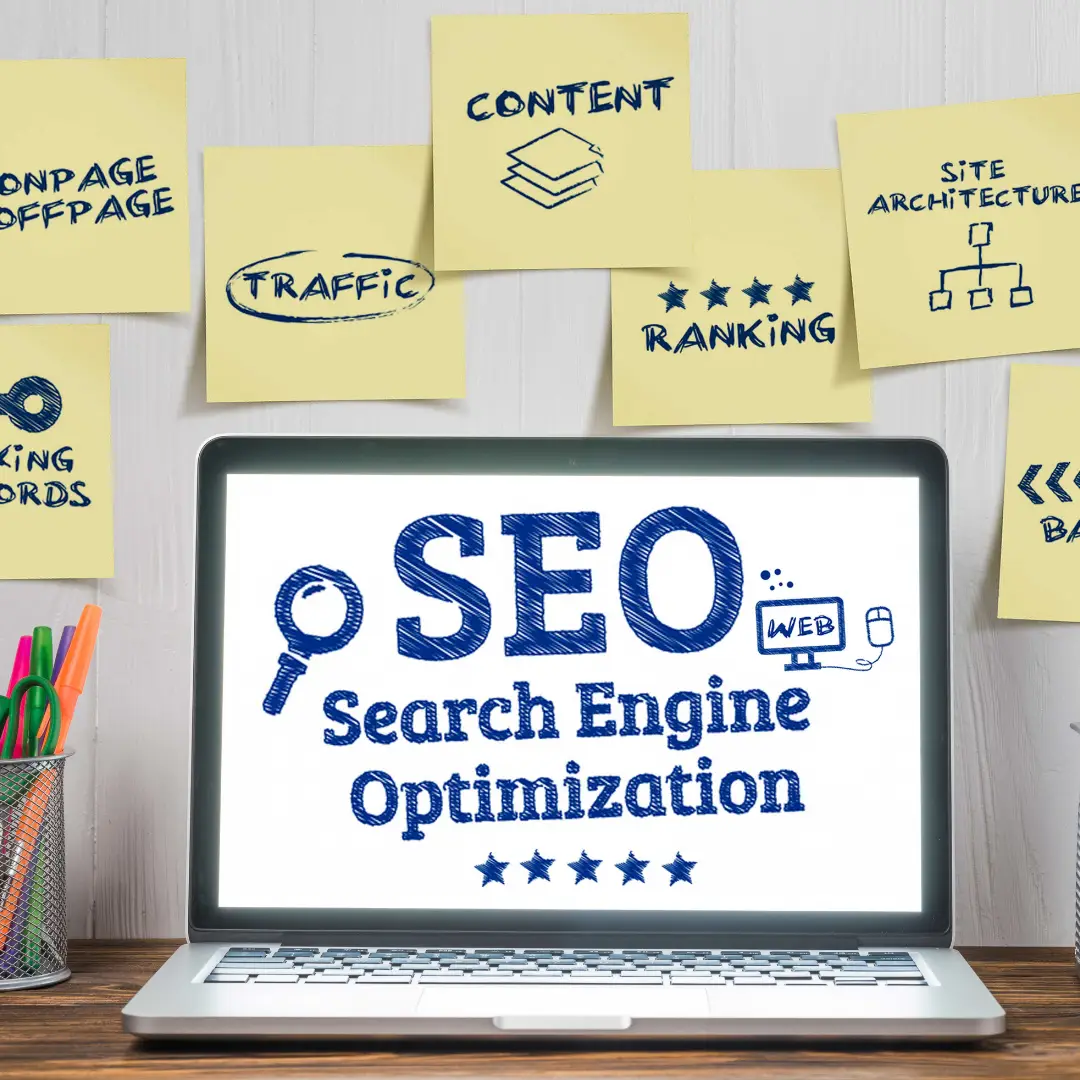
Visit natural referencing, or SEO (Search Engine Optimization), begins with a strategic keyword research : Identify the search terms that your future customers actually use. In Belgium, you need to take linguistic and local specificities into account in order to attract qualified traffic and gain visibility on search engines.
1. Keyword Research: The 4-Step Method
Objective: find queries that convert (visibility + sales). Here is a practical mini-tutorial to map your keywords and associate them with the right pages.
- 1 — Analysis of intentions : Distinguish between informational, commercial, and transactional intent. Prioritize keywords where the intent shows a willingness to buy or contact (e.g., «emergency plumber Brussels» vs. «how to unclog a sink»).
- 2 — Volume collection : Use Google Keyword Planner, SEMrush, Ubersuggest, or AnswerThePublic to obtain volumes and related ideas. Note that Google Keyword Planner requires a Google Ads account and provides ranges for certain volumes.
- 3 — Local prioritization Add Belgian locations (Brussels, Antwerp, Liège, Namur) and translate into French, Dutch, and German if necessary. Example of a long tail: «best hairdresser in Antwerp for curly hair.».
- 4 — Keyword mapping → page : for each priority keyword, assign a target page (homepage for brand, service pages for transactional queries, blog for informational searches).
Tip: Aim for a mix of high-volume keywords and long-tail keywords with high conversion rates to attract customers quickly while building a lasting presence in the results.
Illustrative examples with figures
- Generic keyword: volume 1,000/month — high competition — use on service page.
- Long local tail: volume 30–200/month — strong intent to contact — ideal for local pages or product listings.
Measure your progress: track positions and traffic via Google Search Console and an analytics tool (e.g., SEMrush). Focus your efforts on queries that bring in qualified traffic and customers.
Quick checklist — Keyword research
- Set objectives (visibility, qualified traffic, conversions).
- List intentions (information / commercial / transactional).
- Get volumes (Google Keyword Planner, SEMrush).
- Prioritize (long tail + local to start).
- Associate each keyword to an existing or future page.
Want to go further? Download our complete checklist or request a keyword audit to find out about specific opportunities for your sector and geographical area in Belgium.
2. On-Page Optimization: Technical and Editorial Foundations
On-page optimization encompasses all the actions that need to be taken directly on your pages to make them understandable and prioritize them for search engines. When done well, it improves your site's visibility, attracts qualified traffic, and facilitates conversion.
a) Optimized meta tags: title and meta description
Each page must have unique, user-oriented meta tags. Here are some simple rules to follow:
- Title : unique, include the main keyword (e.g., local service), ≤ 60 characters. Before/after example: Before: «Home» — After: «Plumbing service in Namur – Rapid response.».
- Meta description Summarize the offer and encourage clicks, 120–155 characters; include a value proposition and, if relevant, a location.
- Hn tags : only one H1 per page, H2/H3 for structure. Place the main keyword in the H1 and variations in the H2.
b) Quality content: structure, relevance, and formats
- Clear structure : Organize your pages with H1/H2/H3 headings, short paragraphs, and lists. For an article titled «Benefits of Local SEO in Belgium,» create sections for Brussels, Flanders, and Wallonia.
- Natural integration of keywords : Use your main keywords and their variants (synonyms, local expressions) in a natural way—avoid stuffing. Prioritize usefulness for the user.
- Engaging formats : mix text, optimized images, videos, and infographics to increase time spent and perceived quality.
- Structured data (schema.org) Add schema markup (LocalBusiness, Product, FAQ) to help search engines better understand your pages and earn rich snippets.
c) Internal links and networking
A well-thought-out internal linking structure improves navigation, distributes authority among your pages, and facilitates crawling by search engines.
- Rule of thumb : every important page must be accessible in ≤ 3 clicks from the home page.
- Anchor text : Use descriptive anchors containing keyword variations, without over-optimizing.
- Sister pages : link the service pages to each other and to articles that address objections or explain the benefits.
d) Additional technical SEO (quick check)
- URLs : short, readable, and containing the keyword when relevant.
- Image alt attributes : describe the image and, if relevant, include a keyword variant.
- Canonical tags : Avoid duplicate content by setting the canonical URL.
- Sitemap / robots.txt : ensure that your important pages are indexable and listed in the sitemap.
- Backlinks Even if we are talking about on-page SEO, a high-quality external link strategy enhances the relevance of your pages.
Before/After — concrete example
Plumbing service page:
- Before: Title = «Plumbing»; H1 = «Our services»; generic content.
- After: Title = «Plumber in Namur – 24/7 Repair Service»; H1 = «Plumbing Repair in Namur»; FAQ, testimonials, and localized CTA sections.
Recommended tools for on-page analysis: Google Search Console, PageSpeed Insights, SEMrush (audit), Screaming Frog to crawl your pages. These tools help prioritize optimizations on the pages that will bring the most visibility and traffic.
Need a quick check? Offer a free on-page scan: a short audit (title, meta, Hn, images, speed) will identify the five corrections you need to make to improve your pages' SEO and conversion rates.
3. Improving User Experience (UX): an essential criterion for search engines
User experience directly influences how Google and other search engines evaluate your site. An optimized UX retains visitors, increases qualified traffic, and improves your chances of appearing at the top of results for important queries.
a) Loading time — objectives and concrete actions
A fast website reduces bounce rates and promotes natural referencing. Target loading times. less than 2.5 seconds for LCP (Largest Contentful Paint) and work to reduce CLS (Cumulative Layout Shift).
- Optimizing images : convert to WebP, resize, compress, and enable lazy loading.
- Reduce scripts : Remove unused resources, minify CSS/JS, and load non-essential scripts asynchronously.
- Accommodation : Choose a fast hosting provider and CDN solutions to reduce latency, especially if you are targeting multiple regions in Belgium.
b) Responsive design — essential for capturing mobile traffic
The majority of internet traffic now comes from mobile devices: make sure your website offers a smooth experience on all screens. Test and correct the following points:
- Mobile ergonomics : clickable buttons, simple menus, short forms.
- Mobile loading time Optimize resources for slow connections.
- Adapted content Prioritize information that is useful for mobile users (contact details, opening hours, location).
c) Engaging visual content and conversion
Images, videos, and infographics increase time spent on your site and promote conversion. Integrate optimized formats tailored to your offering:
- Short videos : tutorials or product demonstrations to quickly explain your services.
- Infographics : synthesize benefits and improve sharing on the web.
- Alt attributes and transcripts : describe the media for accessibility and SEO.
Measure and prioritize — recommended tools
To target the actions that will have the greatest impact on traffic and conversion, measure with:
- Google PageSpeed Insights — identifies performance issues and suggests corrections.
- Lighthouse — comprehensive audit (performance, accessibility, best practices).
- Google Search Console — Track indexing, Core Web Vitals, and queries that drive traffic.
Priorities for action (urgent)
- 1) Optimize large images and enable lazy loading.
- 2) Eliminate blocking scripts.
- 3) Check the mobile display and simplify navigation.
Need a customized benchmark? We offer a free Core Web Vitals diagnosis for your website: in just a few days, you will receive a clear report detailing the actions to be taken to improve speed, UX, and therefore SEO performance.
4. Why choose WEBIPHI for your SEO in Belgium?
WEBIPHI is a agency specializing in creation and optimization from site internet for Belgian companies. Our approach combines auditing, editorial strategy, technical optimization, and netlinking actions to achieve results measurable and generate qualified traffic.
- Local expertise : we understand the specificities of the Belgian market (Brussels, Flanders, Wallonia) and tailor keyword research and content creation to each region and language in order to capture the right audience.
- Customized solutions : each company has different objectives (visibility, traffic, sales). We design a strategy tailored — audit, on-page optimization, page creation, content, and backlink campaigns — and implement a concrete action plan.
- Measurable results : regular reports (positions, traffic, conversions, high-performing pages) to track progress and adjust strategy. Our clients see the first visible results within a few weeks, depending on the sector and competition.
Our services — what we provide
- Complete SEO audit (technical, content, backlinks) — clear diagnosis and priority optimization plan.
- On-page optimization : titles, meta, Hn structure, structured data, optimization of product/service pages.
- Content creation : articles, local pages, product listings to improve visibility on search engines and meet customer expectations.
- Backlinks & partnerships : acquiring high-quality links to strengthen your website's authority.
- Monitoring & reporting : regular reports and steering meetings to measure impact and adjust strategy (SEO + Google Ads if necessary).
Evidence and procedures
We work with companies in various sectors and provide case studies demonstrating increases in traffic and rankings for key search terms. Upon request, we share local references. Commitments and deliverables (report frequency, duration of actions, pages analyzed) are formalized in our proposals.
Free SEO audit — concrete offer
Request a free SEO audit : within 48-72 hours, we carry out a quick diagnosis (20 points checked) of your website and provide a summary report with the actions priorities to be implemented to improve visibility and attract customers.
Do you want initial results Quickly? Contact our SEO agency (SEO agency) to discuss your goals. With a strategy aligned with your priorities, we help your business climb the search engine rankings and convert internet traffic into real customers.
To learn more or schedule your free audit, click to contact us—we will work with you to assess the specific needs of your business and determine the next steps.